
Panic over a potential US recession has caused a significant drop in global stock markets. The market crisis has led to the shutdown of five major trading platforms.
Points
- Major trading platforms, including Fidelity, TD Ameritrade, Vanguard, and Charles Schwab, experienced outages.
- Wall Street and crypto markets suffered significant losses, reminiscent of Black Monday.
- Interest rates at a 23-year high intensified recession fears.
- Over 2,300 problems were reported with Fidelity alone.
- Federal Reserve response is highly anticipated.
The fear of an imminent US recession has triggered widespread panic, leading to a significant drop in global stock markets. As a result, several major trading platforms, including Fidelity, TD Ameritrade, Vanguard, and Charles Schwab, have experienced outages.
According to Downdetector, users have reported over 2,300 issues with Fidelity, 1,400 with TD Ameritrade, 1,900 with Vanguard, and a staggering 14,000 with Charles Schwab as of early morning. This has caused a massive disruption in trading activities.
The financial turmoil on Wall Street has mirrored a “Black Monday” scenario, with the Dow dropping more than 1,000 points and the S&P 500 plummeting over 4.2%. CNN reports that the Nasdaq Composite has plunged by more than 6%. This panic extended beyond the US, with Japan and Taiwan experiencing their most significant market losses since 1987 and 1967, respectively.
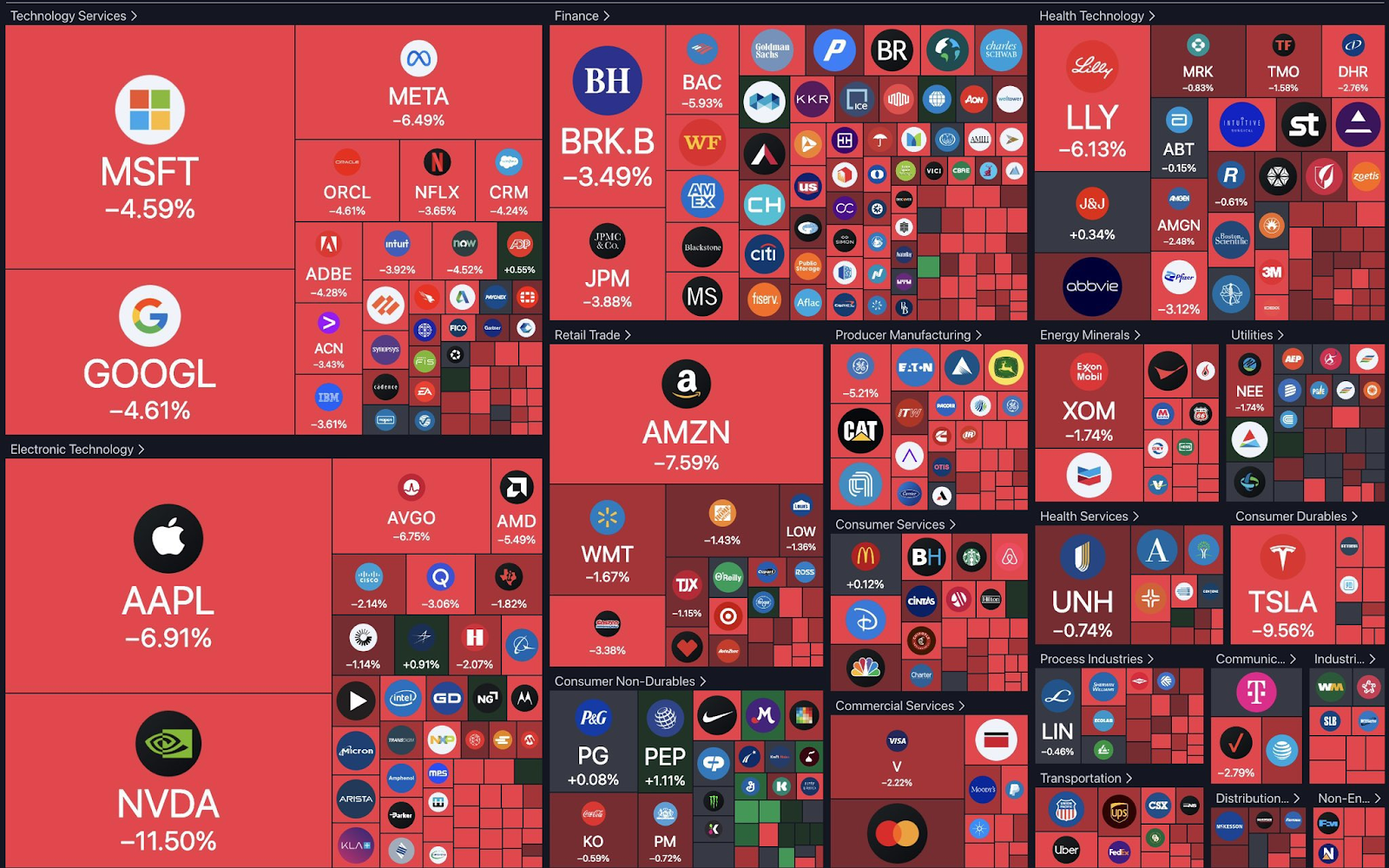
The US Federal Reserve is under immense scrutiny, with Chicago Fed President Austan Goolsbee stating that they are prepared to react to any “deterioration” in the economy. He mentioned that maintaining financial stability is crucial and hinted at a potential emergency rate cut before the scheduled one in September.
In the crypto market, CoinShares reports $528 million in outflows as fears of an economic slowdown mount. The crypto market’s “Black Monday” has exacerbated the panic, causing a slowdown in operations across both traditional and decentralized finance (TradFi and DeFi) platforms.
解説
- The market’s reaction to recession fears highlights the interconnectedness of global financial systems.
- The significant outages reported by major trading platforms suggest a critical need for robust infrastructure to handle market volatility.
- The Federal Reserve’s potential response with an emergency rate cut could stabilize markets temporarily, but long-term strategies are essential.
- The crypto market’s reaction to traditional market movements emphasizes its integration into the broader financial ecosystem.
- Continuous monitoring and swift responses from financial institutions and regulators are crucial in mitigating such crises in the future.